

October 31 is more than Halloween. Long before carved pumpkins and costumes, this night marked one of the most sacred thresholds in the ancient Celtic year: Samhain. Pronounced SAH-win, this festival has roots stretching back more than two thousand years, and its themes — honouring those who have passed, marking endings, and welcoming the quiet of winter — speak as clearly today as they ever did.
What Is Samhain?
Samhain (from Old Irish, meaning "summer's end") was the great autumn festival of the ancient Celts — the people who inhabited Ireland, Scotland, Wales, and much of Western Europe before the Roman era. It was observed on November 1, with the sacred evening beginning at sundown on October 31.
In the Celtic calendar, Samhain marked the end of the harvest season and the beginning of the dark half of the year. It was one of four great fire festivals that structured Celtic life, sitting opposite Beltane (May 1) on the wheel of the year — a mirror held up to the light from the other side of autumn.
Most significantly, Samhain was considered a liminal time — a threshold, a "between" — when the boundary between the world of the living and the world of the dead grew thin. This quality of in-between-ness is at the heart of everything the festival represents: endings and beginnings, darkness and light, letting go and welcoming what comes next.
Where Did Samhain Come From?
Archaeological evidence of seasonal fire festivals in Ireland dates to at least the Iron Age, and references to Samhain appear in some of the oldest Irish manuscripts in existence — texts from the 9th and 10th centuries CE describing traditions already ancient by the time they were written down. Hill of Ward (Tlachtga) in County Meath and the Hill of Tara — seat of the High Kings of Ireland — were both associated with great Samhain bonfires and gatherings.
When Christianity spread across Celtic lands from the 5th century onward, the Church gradually layered its own observances over the existing Celtic calendar. All Saints' Day was moved to November 1, and All Souls' Day placed on November 2 — bringing Christian and Celtic commemorations of the dead into close alignment. The folk customs of Samhain continued in various forms through the following centuries, eventually evolving into the Halloween traditions that reached North America with Irish and Scottish emigrants in the 1800s.

Crystal Light Spray — Violet · Colour Energy
What Happened at Samhain? The Old Traditions
Ancient Samhain observances centred on fire, community, and the spirits of the dead.
Great communal bonfires were lit on hilltops, believed to carry protective and purifying energy. Community members would take a flame from the communal fire home to relight their hearths, symbolically connecting each household to the whole of the community — and, in a deeper sense, to the continuity of life itself.
The thinning of the veil between worlds was taken seriously. Departed ancestors and spirits were thought to walk among the living more freely at this time, and it was customary to set a place at the table for the dead, leave offerings of food and drink outdoors, and make space in the home for those who had passed. This practice of honouring the ancestors — acknowledging that those who came before us are still part of our lives — remains one of the most enduring and moving aspects of the Samhain tradition.
Divination was also woven into the season. The liminal quality of this time was considered particularly favourable for seeking insight — into the year ahead, into relationships, and into personal paths. It is why, even in the secular Halloween of today, the imagery of fortune-telling and seers remains so closely associated with October 31.

Crystal Light Spray — Indigo · Colour Energy
The Colours of Samhain and What They Mean
Every season carries a colour signature, and Samhain is particularly rich in this regard. Three colours are traditionally associated with this time of year, each capturing a different dimension of its meaning.
Orange is the colour of the harvest — ripe pumpkins, falling leaves, firelight at dusk. Within colour energy traditions, orange is associated with warmth, creativity, abundance, and the vitality of transition. As summer gives way to darkness, orange energy holds the memory of the light we carry into the winter months. Explore orange colour energy →
Violet is the colour of spiritual awareness and the Crown Chakra — the energetic centre traditionally associated with connection to something greater than the self. At Samhain, when the veil between worlds is said to be at its thinnest, violet energy speaks directly to the mystery of what lies beyond: to spirit, to lineage, to the continuing presence of those who have passed. Many people find violet candles, oils, and rituals particularly meaningful at this time of year. Learn more about violet colour energy →
Indigo is the colour of deep intuition, inner knowing, and the Brow Chakra. Samhain has long been considered one of the most powerful times for turning inward — for listening to what arises when the noise of summer has finally quieted. Indigo energy supports that quality of reflective awareness and heightened perception that this season naturally invites. Explore indigo colour energy →
The Crystal Light Spiritual Spray — Violet — made with Jasmine Sambac, Frankincense and Jasmine Absolute, and charged with Quartz Crystal and Rose Quartz — and the Crystal Light Spiritual Spray — Indigo — made with Lavender, Patchouli, Myrtle and Myrrh, with Amethyst and Moonstone — are both quietly beautiful choices for marking this season's threshold energy.
How to Mark Samhain in a Modern Way
You don't need to follow any specific tradition to find meaning in Samhain. Many people are drawn to this time of year simply because it feels significant — a natural pause, a moment to reflect before the year turns toward its close.
Create a small ancestor space. This can be as simple as placing a photograph of a loved one who has passed alongside a candle, a flower, or a small cup of water. The intention matters more than the arrangement — what counts is the act of remembering.
Take a ritual bath. Bathing with intention is one of the oldest cleansing practices across many traditions. Colour Energy Dead Sea Salts and Pink Himalayan Salt both lend themselves beautifully to this kind of mindful bathing — releasing what belongs to the year that is ending, making space for what comes next.
Clear your space. Burning herbs is a widely practised tradition at seasonal thresholds. Sage and palo santo carry different qualities of clearing, and choosing one intentionally can become a small Samhain ritual in itself.
Tend to your energy. The Aura Cleanser Spray is designed for energetic clearing and renewal — a light mist through your space or over your aura as a way of marking the seasonal shift before settling in for the evening.
Reflect and set intentions. Samhain sits on the eve of the Celtic New Year. Many people find journaling at this time particularly clarifying — writing what they are ready to release, and what they are choosing to carry forward into the season ahead. If you are drawn to the deeper interior work this time of year invites, our guide to shadow work explores this territory thoughtfully.
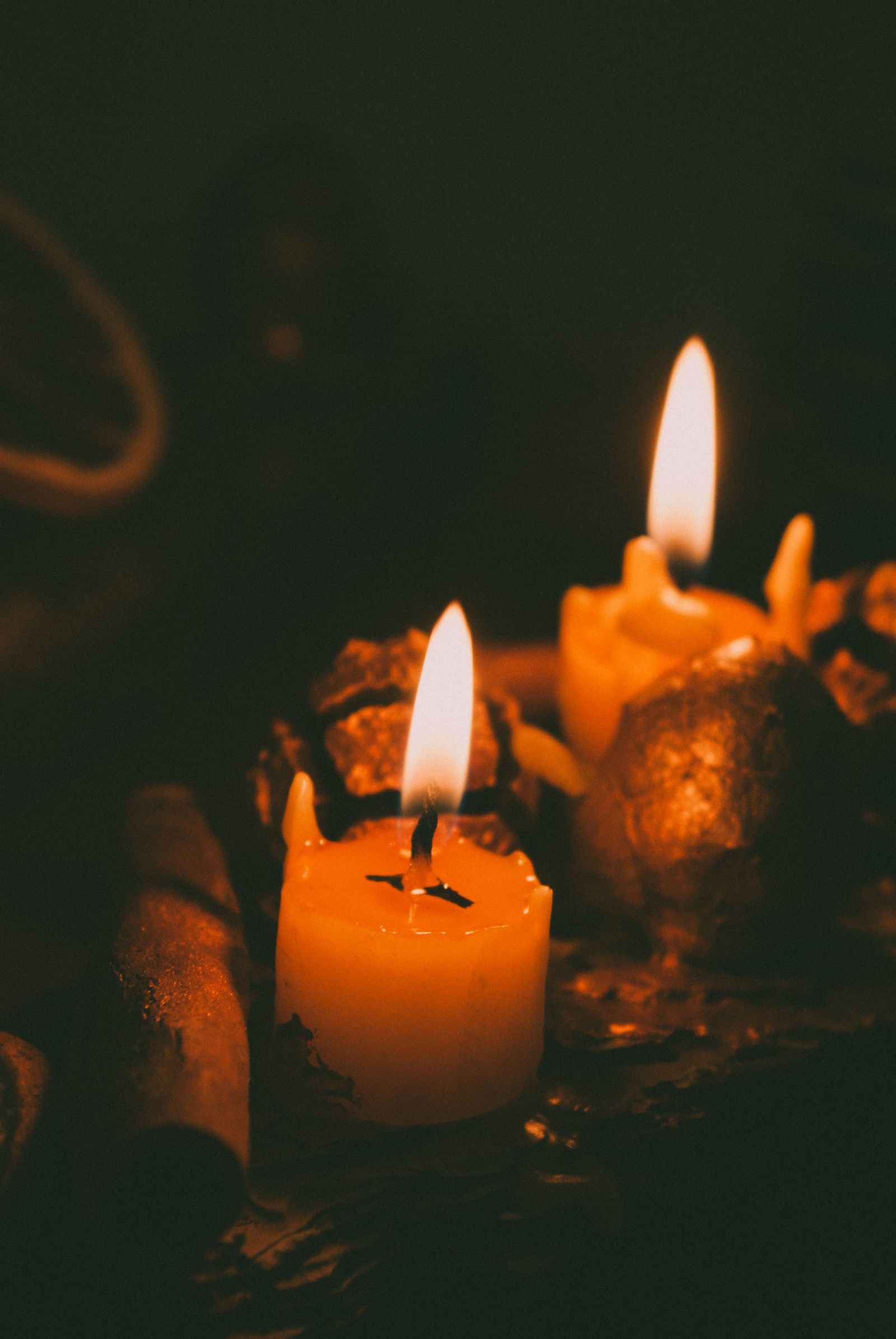
Samhain Ritual · Seasonal Intention
Samhain and the Colour Energy Approach
At its heart, Colour Energy is a way of working with colour, scent, and intention to support the qualities you want to cultivate. Samhain is one of the most naturally aligned moments in the year for this kind of practice, because the season already invites exactly what Colour Energy encourages: pausing, noticing, attending to what we feel rather than just what we do.
The Crown Chakra — associated with spiritual awareness and violet colour energy — opens most naturally when we slow down enough to listen. The Brow Chakra, associated with intuition and indigo energy, deepens when we turn our attention inward rather than outward.
Whether you wear a Chakra Light Essence Roll-On in Violet as a quiet personal ritual, or mist a space with Guardian Angel™ Spray before sitting with a candle and a photograph of someone you love who has passed, the intention is the same: to mark this threshold, to acknowledge the year that is ending, and to open gently to what comes next.
Frequently Asked Questions
Is Samhain the same as Halloween?
Halloween grew directly out of Samhain. When Irish and Scottish emigrants brought their folk traditions to North America in the 1800s, the festival gradually evolved into the secular holiday we recognise today. Costumes, jack-o'-lanterns, and trick-or-treating all trace back to older Samhain customs, filtered through centuries of folk tradition and popular culture.
Is Samhain a religious festival?
Samhain has pre-Christian Celtic origins and is observed today within Wicca and various modern Pagan traditions as a sacred festival. Many others approach it simply as a seasonal marker — a meaningful cultural and natural threshold that does not require any specific belief system to feel significant.
Do I need to follow a specific tradition to observe Samhain?
No. Many people are drawn to the themes of Samhain — honouring those who have passed, reflecting on endings, marking the seasonal turn — without belonging to any particular tradition. Lighting a candle, setting an intention, or simply pausing to acknowledge the day are all meaningful ways to mark the occasion.
What is the connection between Samhain and Día de los Muertos?
Día de los Muertos (Day of the Dead), observed on November 1 and 2 in Mexico and across Latin America, is a separate tradition rooted in Indigenous Aztec and Nahua culture, shaped by Catholic influence over centuries. It shares with Samhain a focus on honouring departed loved ones at this time of year — but the two traditions developed entirely independently.
Samhain arrives at the same threshold every year: the point where summer's energy finally releases, the world turns inward, and the past meets the present in a way that feels almost tangible. However you choose to mark it, this evening offers something rare — a permission to slow down, to remember, and to carry what matters into the winter ahead.